Showing posts with label travel. Show all posts

Saturday, September 19, 2015

Bulls and old stuff at Butrint, Albania

We get up early to escape the heat. Though it's mid September; though the crowds of Kosovar, Polish, German and Russian tourists are gone; though all the locals tell us that the summer is gone and the season is over; the heat is evident even at seven am. By ten, we will be dripping sweat, white rivulets of the salty liquid and sunscreen running into our eyes and pooling on our upper lips. That makes for excellent beach weather but not excellent hiking around a hill weather, so early we went. By 8:30 we were on the 5 kilometer strip of road connecting Ksamil to Butrint, and before nine we had purchased entry tickets. I was excited to see a place that is featured in Virgil's Aenid and various other paintings, novels, and poems-it feels like walking right into art. There were few other adventurers around, and for the most part I felt like we had the place to ourselves.

Immediately upon entry, I see: two Roman columns to the left, a Venetian tower in front, and a Venetian triangular fort and an Ottoman palace to the right. This mish mash of ages, origins, and styles is indicative of the site - and of this whole egion, where empires and invaders have risen and fallen like the tides of the Ionian sea on its beaches.

The story recounts that, fleeing the fall of Troy, its founders sacrificed a wounded bull that washed ashore. This was taken to be a good omen and so the place was called Buthrotum meaning wounded ox, and this also became the symbol of the city. Like on the glorified door frame which shows a lion eating an ox head. Because it's not weird at all to have a foreign animal devouring the symbol of your city placed prominently on one of its gates. Besides which, where and home that bull floated in is a mystery-but not as much of a mystery as why it dying on the shore made someone think, "Yes! The gods want me to live here with a carcass that just floated in!" This becomes even more confusing hen the museum also tells that originally, this place was all land, then the seas rose and made it an island and caused general chaos and confusion...

Whatever its origins, Butram became a major trading post in the 8th century BC and was governed by the Romans, Ottomans, and Venetians in turn.  As the brochure says, "What you see today is an amalgam of monuments representing a span of over 2000 years from the Hellenistic temple buildings of the 4th century BC to the Ottoman defenses created in the early 19th century." This little bubble of land has perhaps seen more human history than our American middle school textbooks cover.

It's a delightful place to wander, surrounded not only by the glories of the past but by the beauty of the present. Walking through some dead rich guy's dining room, I glance up to find a picturesque strait peeking between the low scrubby trees and grasses. The sun is bouncing off the water in all its golden morning radiance, an ugly bird as big as my forearm hops along the tree branch, a fish jumps in the water, a faded fishing boat floats on the far shore. A farm house stands more solidly than these flooded marble blocks, abandoned as the water table continued to rise and the Roman dude came home one too many times to a flooded foyer.

I could go back among the path and follow the prescribed tour route ("deviate at your own peril!" They warn). But instead I continue under the trees, along an old wall. I suppose it's just old and falling apart, but it is beautiful in its decay and more so against the steady water, with its glaring highlights and deep shadows, riven by massive it dead tree roots. I assume those trees were cut to prevent them from destroying these "precious" stones any further. In some places, the stone wall is being shored up by a wood plank wall. And I wonder, why do we work so hard to protect old stuff, to keep ruins in a permanent state of picturesque ruin but not too ruiny? Was it worth the death of that twisty, gnarly, beautiful old tree to keep some rocks stacked for another decade?

I round the end of the island, where the wall climbs up away from the shore and the castle tower juts brilliantly against the sky over deeply shadowed green leaves. From the other side of the inlet ringing sounds drift across, perhaps a flock of sheep wearing mismatched bells or a particularly cacophonous wind chime. With this backdrop, it's so easy to lapse into wonder at the world and the futility of our behaviors. At this archaeological sight, one of the most extensive and lovely I've seen, it seems that we are fighting against destruction by nature, combating the passage of time, prohibiting the replacement of old with new. Why? What is the purpose? Perhaps, by guaranteeing another century's immortality, we are seeking to assure our own. In the face of fleeting lives and certain death, do we seek assurance that we will not be forgotten? That our accomplishments will live on in stone, in spite of wind and sand and tide and time? In spite of humanity's wars and carelessness and ambition and destruction?

I duck under a low carved lintel (yes, the lion-eating-city-symbol one) and climb broad, lazy stairs up to the castle. Every few steps, I stop and look back to admire the water, the woods, the white stones, drinking in a view that seems only to get more beautiful with familiarity. I follow the sign to the Muze and walk back down more stairs into the oddly basement-like museum, still pondering ponderous things.

As you may or may not have experienced yourself, nothing puts an end to philosophical musings and brings you solidly back to earth quite as quickly as the smell of latrine. I think they took the old toilet pit of the castle and thought, "Ah yes, what a perfect place for a museum." Then they scattered bits of statues, old coins, and explanatory posters around and patted each other on the back for a job completed.

Needless to say, we didn't hang about too long. Nevertheless, it was still a delightful visit to Butrint. 

Saturday, August 15, 2015

Leaving - For Good

There’s this song that’s been stuck in my head lately. 

“I’ve heard it said people come into our lives for a reason, bringing something we must learn and we are led to those who help us most to grow - if we let them. And we help them in return. Well I don’t know if I believe that’s true, but I know I’m who I am today because I knew you…”

(Can you name that song?)

My departure is looming, less than three months away - and some days, I simply cannot wait to get out. But other days, or even other moments in those same days, it really does feel as dark and dramatic as that. And it’s not because I’ll miss the food (no more macabo rapé or nkwi? oh darn.) and it’s not because I’ll miss parts of the culture (I’m less than you because I’m a woman? cool.). It’s because of the people who have adopted me as their own, loved me, appreciated me - and yes, even those who have taken me for granted. 


It’s because of my awesome counterparts who commiserated about the parts of Cameroon I couldn’t stand, enjoyed the things I loved, and celebrated all our successes big and small. Anne and Delphine, two women without whom I wouldn’t have made it through these two years. 


It’s because of all the other PCVs who went rode the same roller coaster. Though we may have screamed and covered our eyes or screamed and kept our hands up in the air, we all screamed together.


It’s because of this little boy - no, young man - Borel Faustin. This boy who came running to me, the definition of “grinning ear to ear” to show me his school report card when he passed at the end of the year. This boy who came running to me in tears when he had a splinter. I gave him one of my favorite t-shirts that I found in the market - a Zara boys t that says “Welcome to Hollywood!” - because I thought that was the best possible thing I could do with one of my favorite t-shirts. And he rewarded me with another one of those Hollywood grins. 


It’s because of these two little girls, Samira Paschale and Lauren Fabienne. These kids who drove me absolutely nuts, throwing my shoes onto the roof and ripping my baby sunflowers out by the roots. These kids who perched one on each hip, baby heads resting on either shoulder, and slept. Who reached their arms up to me with faces screwed up in screams and let themselves be conforted. Who learned to say thank you (we’re still working on please) and learned to make fish lips from me. 

It’s because of the 200 elementary school students who I watched transform from timid copy cats into creative and excited artists in art class.


It’s because of the 70 or so high school girls - and three boys - who I watched blossom into confident young adults during our after-school club. 

It’s because of the 46 young women trained as peer educators during our summer camp who said, now I can talk to my parents, now I am not afraid to speak in front of my class, now I know so much more - who looked us in the eyes and told us, Because of you, I’ve been changed for good.

No one can tell me these two years were a waste of my time, even in my darkest and most miserable hours, because I have touched the lives of all these individuals - as they have touched mine.


At the end of two years, it’s these people and relationships more than anything else that I will carry with me as I move on to my next adventure. Most of what I’m feeling, I don’t know how to express in either English or French, and I’m forced to turn back to this song that plays on repeat in my head. “Who can say if I’ve been changed for the better? But because I knew you, I have been changed for good.” I hope that I can come back in a few years and see how my friends and family here have changed and grown. But even if we never meet again, I know I will carry all these people in my heart no matter where life takes me. Most mornings lately, I wake up and I open my door and walk out into the sunshine and my chest feels ready to burst with all the love I feel for Bansoa and by extension the world. 


Fight on for love. 

Friday, July 31, 2015

East of the Sun Trip Part 5 : in which I conclude that the world is in fact magical

East of the Sun Trip Part 5 : in which I conclude that the world is in fact magical and get new bruises on my butt

Our fourth sunrise in Lobéké. We rise, significantly less shinily than the sun, and start for the savanna. Valentin calls after us: “Today, you will see a gorilla!” 

“Promise?” I grump back. 

“You’ll see,” he responds, with his ever-present grin. 


Thursday, July 30, 2015

East of the Sun Trip Part 4

East of the Sun Trip Part 4 : In which we continue to take for granted the natural beauty around us to wonder miserably if we will actually leave without seeing any gorillas

One of the "mirador" or observation towers we spend hours in
After a disappointing morning at Petit Savanne, we start the 10k hike to Djangui. On the hike, we see several Colobus monkeys (the originator of moto-engine-revving-noise) and some elephant tracks (I don’t understand how such big animals can pass through the forest so quietly) but not too much else of interest. 

Look at his cute little bearded face! 
Despite the lack of animals, Valentin repeatedly brought wide grins to all of our faces. Valentin is Baka, but at six-foot-something he’s definitely not a pygmie, and he grew up in and out of the forest. He is so obviously at ease here, drinking crystal clear creek water from a folded leaf cup or lounging his large frame on handy vines, roots, or saplings. He makes me feel like a clomping clutz the way he moved with such ease and confidence. When we stop to rest, he drops our bags and goes gleefully traipsing off into the forest, returning with elephant poop or a half-eaten rabbit (he’d scared off the eagle) or a rotted turtle or a bird nest complete with three lil’ babies peeping inside (and yes, he hangs it back up afterwards where the momma bird could find it again). Once he leads us all through thick undergrowth the show us gorilla beds and gleefully—no other adverb does him justice—gleefully recount how a gorilla sleeps with its butt here and its head here and just sleeps like this and it SNORES (giggle) and he knows all this because one time he snuck up on a big male gorilla and scared it out of its nest. Casual, Valentin, messing with 500 pound animals strong enough to rip a man’s arm right off, probably with a ten year old boy’s exuberance and delight. 
Beautiful bird's nest.
"And this is where he puts his butt..."
During our hours in the observation tower at Djangui, we finally see some wildlife! Five water buffalo with their funny birdy friends, a bunch of birds including a teal sun catcher and a great blue Turaco. But, no gorillas. 

Wednesday, July 29, 2015

East of the Sun Trip Part 3 : In which we remember that excellent travel buddies make all the difference

After a few fleeting hours of sleep, we face a second day of travel much like the first. We were unlucky: we were at the travel agency before it even opened, we didn’t manage to get tickets on the first and only scheduled bus to Maloundoun. We were lucky: they ran a second bus and we were on it. Not that we were feeling particularly lucky to be back on a prison bus only a few hours after escaping the last one. 

Kid selling hard boiled eggs at the travel agency - and rocking an Obama Change shirt.
I won’t bore you with more of the same details about travel, except to note that it was clearly evident that our surroundings were becoming less “developed” and more jungly. We saw more Baka (pygmie tribe) houses, more children with sad distended bellies, and more logging trucks contributing to the stripping of this old-growth forest somewhere just out of sight. It put me in the mindset of Fern Gully, except the scary machines are winning. But for all the sad or heart wrenching views, there were others intriguing or lovely. We saw beautiful blue butterflies, we saw trees so big that Kate, Joe, and I couldn’t hug around the base of their trunks, and FINALLY around 4 pm we saw our destination: Mambele.

In life, stuff goes wrong.
But that only adds to the adventure. 

Beautiful, beautiful Mambele. A tourist attraction in its own right. Wide boulevards, interesting architecture, and welcoming inhabitants. 

Tuesday, July 28, 2015

East of the Sun Trip Part 2 : In which we find ourselves on a prison bus

Now modern transportation is a wonderful thing. Wheels, awesome. Engines, even better. Jet plans, fantasy come true. However, of the 293 kilometers between Bertoua and Yokaduma, I’m guessing 20km are paved. So of all the modes of transportation for this trip, I’d rank them by preference in this order:

1. My own big 4x4 air conditioned SUV
2. Someone else’s big 4x4 air conditioned SUV
3. Horse
4. Sway backed donkey
5. Big horned african cow
6. My own two feet
7. Prison bus

So did we take our big SUV? Against Peace Corps regulations, and I wish I was that fancy. Perhaps we galloped along through the wilderness, just us and our horses, channelling John Grady? Against Peace Corps regulations, and I don’t know how to ride a horse. No, we were the lucky folks crammed like sardines in option number seven! 

What, you might ask, is a prison bus? Good question! It is rather the size of a minivan, but instead of plush seats, it is filled with four rows of benches in the back. These benches may or may not be padded. To enable people to climb in and out of the front rows, the benches are broken up by one folding-backed seat in each row. This seat is probably not level with the bench to either side of it, and probably doesn’t leave enough room for a 5’6” individual to put their knees straight in front of them. (I would know, as that is my height and had the pleasure of a middle seat.) The driver is separated from his two (or three or four or…) front passengers by the hump of the engine which conveniently heats the whole bus and may need water poured in regularly to cool it; he’s separated from his back passengers by an intimidating metal grate. Thus the name prison bus. Not only does it feel like punishment, but passengers have the impression that they’re top-security-barred-in to protect the driver - and he probably needs the protection after a few hours in that contraption! It is made to seat twenty in the back, but as many as three more may stand in the back, and others might hang off the back on climb onto the roof with our copious quantities of luggage. 
According to the writing, things that are forbidden include: speaking to the driver, throwing glass bottles
out the windows, or vomiting.

Monday, July 27, 2015

East of the Sun Trip Part 1 : In which we plan a trip before a Trip

Before I start this story, I want to add a note... I had written this out as a five part story so that it wouldn't drag on and on and on in one blog post. But, T.I.A., internet and power are unreliable and when one's available the other isn't (yeah I don't understand either how there's enough power for the wifi box but not to charge my computer.) So I'm uploading what I can now, and the rest will have to wait! Fight on :) /\/\/\/\/\/\/\/\/\/\/\/\/\/\/\/\/\/\/>>

As I approach the end of my two year Peace Corps service, it’s not all about wrapping up projects, selling/packing/gifting my impressive quantity of accumulated stuff, and saying tearful goodbyes. That’s the hard side.

The fun side is the Close Of Service or “COS” trip that Kate and I have been planning for months now. We’re constantly whatsapp-ing each other Lonely Planet articles and book suggestions, building our pinterest board, or day dreaming. 

It’s a lovely pastime, trip planning - but it was still a ways off. Six months out, you can only discuss the winery options in Bulgaria and Macedonia so many times, or speculate about Hungarian baths and paprika-laden cuisine, or… 

So we planned a trip before The Trip. 

I wanted to visit the my last (open aka safe-isn) region of Cameroon, the East, and both of us wanted to see some exotic wildlife. To cross these items of our Peace Corps fuckit - ah, excuse me, bucket - lists, we planned a trip to Lobéké Wildlife Reserve. Lobeke is a nature preserve spanning three countries (Cameroon, Central African Republic, and Congo) and run by the WWF. It is also one of the last places where visitors have the opportunity to see wildlife like Western Lowland Gorillas, forest elephants, various monkeys, and a plethora of birds without the menace of Boko Haram. We can’t visit Rumsiki or Waza, so we decided to do whatever it took to get to Lobeke.
Kate's butcher friend, Abubacar, who just smashed a cow head to pieces and
is now showing us the bits of teeth left.

Monday, March 16, 2015

The Highs and Lows of Travel in Cameroon

Or, To Kribi and Back Again

While in the second of two five-hour buses required to travel from Bansoa, West Cameroon to Kribi, South Cameroon (not counting the taxis to Bafoussam, across Bafoussam, or across Yaoundé), I was pondering the joys of traveling. In my mind, I attempted to grade the delightful qualities of these public transportation mini-buses, commonly called "coasters." But even three hours into the trip I had not decided on a ranking because that implies that some characteristics are better or worse than others, and yet they are all so excellent! Here are a few examples, in no particular order of course.

Tuesday, December 23, 2014

The Unexpectedly Expected


Or, Why Our Stereotypes Are Dumb and We Should Open Our Minds

It seems like everyone wants to write the blog Ten Things You'd Never Do In the U.S. And there's nothing wrong with that post, with admiring what is exotic. It's impossible not to notice what is so different from what we're used to!

But I want us to remember, too, that not everything is the "exotic," different, black to our white. Nothing is that simple. So here's a list of seven stereotypes, many of which I held and which are commonly held, but which are simply not true. 

1. Weather

Stereotype: Sub-Saharan Africa is hot and dry. There are huge savannas with blowing golden grasses, parted by the long legs of giraffes as they pass baobab tress on their route to the watering hole. The sun beats relentlessly.

Reality: In the West Region of Cameroon, there's a rainy season and a dry season - and in rainy season (March to October) it gets COLD. I mean, it's not winter. (To my students, I explain winter in the U.S. as being like living in the freezer for three months. They are mind-blown by this idea.) But I head to buy long sleeves and sweaters and jeans because I didn't pack them! I have even been known to wear a *borrowed* airplane blanket like a wrap skirt over leggings. And yes, I have gotten compliments on that wrap skirt…
...turns to the red mud of rainy season.
The red dust of dry season...


Wednesday, November 26, 2014

Fun-tivities in Foumban

In the West region of Cameroon, November and December are the months of cultural festivals. Cameroon is incredibly culturally diverse, and you only need to look at the local languages to see the extent: some sources (by which I mean Wikipedia) estimate that over 230 languages are spoken here. In my village of Bansoa, people speak a different language than Dschang (20 kilometers north) or Bafoussam (20 kilometers south) or any of the villages in between. Which is to say that in November and December there approximately a million parties. And I had the pleasure of attending Nguon, the Bamoun cultural festival in Foumban, at the beginning of November. Here are some highlights!

1) The Sultan's Palace and museum: This is without a doubt one of my two favorite museums in Cameroon (out of the two I've visited). It's full of treasures like the skulls of our enemies that were subsequently used as goblets and parts of animals killed a really long time ago. The excellent tour guides and/or his excellency Josh Shelton will happily tell you plenty of fun stories, like that of the tenth sultan Mbue-Mbue killing all his enemies to forge his borders in blood and black steal then comparing himself to a two-headed snake. It's a symbol that stuck, as you can see in this concrete structure that will eventually (and I stress evennnntually) house the new museum. 

Wednesday, November 19, 2014

Hiking in Beautiful Bangang

About 2 months ago now, Danielle and I went to go visit Alec at his post. He lives in a health center, in a quartier called Bamboue, in a village called Bangang. Bangang is somewhere way off en brousse, at least by the standards of the West region. Located in the Bamboutos mountains, it's full of waterfalls, a tea plantation, logging areas, odd rocks, and terraced farmlands. Some (like Alec) argue that it is the most beautiful post in Cameroon, and though I'm not sure I would go that far, I will agree that it offers stunning scenery. As an advance apology for the really long post about Foumban and its cultural festival - coming soon to an internet-enabled device near you - I'm going to show you instead of telling you how beautiful it is. Alec took us on a meandering five hour hike, and this is what we saw… 

View of the tea plantation and Bamboutos mountains (I think)

Danielle & Alec, taking a break and enjoying the view

A big white sheep dog resting on a big grey rock

View towards the South (?) - probably can see my post from here!

Stumbling across the creek

View of the waterfall

Then we climbed above the waterfall, involving running
away from very large cows with very large horns.

Enjoyin the sunshine :)

Thursday, November 13, 2014

The Definitive Guide to Washing Socks (According to Me.)

Are you struggling to wash your socks? Do you often find that even after washing, your socks appear dingy? If you do not have a washing machine, this may be you! (Then again, if you are a Peace Corps Volunteer, this may not be you, and all of your Cameroonian friends may be clucking their tongues in judgement when you turn your back.)

After extensive observation of Cameroonian women doing laundry followed by a  period of trial and error, after only 14 months of Peace Corps service, I have discovered the perfect sock-washing-system! Simply follow these steps for brilliantly clean socks.


Tuesday, October 21, 2014

Karoling in Kumbo!

I feel I should apologize for my tardy blog posts. Sorry, friends and strangers, readers and skimmers! But I also wonder - does the lateness, the rarity of this blog post make it more valuable? Will it be more popular or less popular? Either way, dear followers, this should be a fun post because it is a post in which I take a trip to Kumbo!

Saturday, 6 September 2014, morning: the beginning, the day of travel, the start of a new adventure - and time to pack. I hate packing, so I have progressively put it off later and later, finally reaching my current point where the moment I finish packing is the moment I bumble out the front door, turning the key twice behind me in the wooden door and securing the heavy padlock on the metal, outer door. I maneuver myself and my bag and my cumbersome motorcycle helmet across the balcony, down the uneven concrete steps, and through the dark and narrow hallway until I emerge, blinking, into the sunlit marketplace in front of my bar.

I carefully tread and thread my way between unhurried shoppers of all ages, bamboo tables piled with produce, carts overflowing with plastic kitchen utensils or used clothing, plastic mats on the ground spread with okra and onions, giant 100-kilo bags of rice or peanuts or red or black or white beans, and rushing vehicles. It's market day, and I will be glad to escape the bustle of today and the work of a few days. I find a bush taxi which will take me out of Bansoa Chefferie and down to the main road, the paved route connecting Dschang and Bafoussam and Bamenda, connecting me to my adventure. The taxi is heading in to Bafoussam, but I get out earlier, at Carrefour Dschang, the three-way intersection between those three cities. Instead of going right towards Bafoussam, I cross the road and turn left, waiting for my opportunity to hitchhike up to Bamenda. It doesn't take too long before a man driving a big, spacious truck pulls over and offers me and three very tall men rides. The three  men, being gentlemen, stuff themselves into the tiny bench of a backseat, long legs and arms held tight to their bodies, and enthusiastically begin conversing in three or four languages: French, English, pidgin, and a local language I don't recognize. I'm silent in the front seat, enjoying a rare moment (and by moment, I mean two hours or so) of traveling in physical comfort. As a light drizzle starts, I do nothing but breathe and let my eyes wander over the beautiful hills and valleys of the borderlands between the grasslands West and mountainous Northwest regions. 

I never travel through Bamenda without stopping to enjoy a frankly luxurious meal - this time, lunch at PressCafé, namely a Greek salad complete with olives and feta cheese (cheese! cheese!) accompanied by a hot coffee and homemade bread. After my satisfying meal, which I shared with Hillary Clinton (by which I mean her book), I take the long taxi ride across the city and then wait for a bush taxi to fill then proceed along the Ring Road to Kumbo. I realize I'm paying for the comfort of my morning's drive with the discomfort of my afternoon's.  With four adults and two young children in the backseat - one screaming six-month old, one calm five year old - I am tilted sideways, have nowhere to put my arms, and am sweating. In other words - a return to normal travel. We bump and thump along the rutted Ring Road, first climbing up out of Bamenda past waterfalls and waterfalls, then rapidly descending down the mountain into a valley. The woman to my left falls asleep; the woman to my right falls ill; my left leg falls asleep. Despite the discomfort - or perhaps because of the discomfort? I have a theory that physical discomfort causes one to appreciate beauty more - the view is stunning. Real mountains, forests and fields, waterfalls and lakes! I can't help but feel my spirits rise with the scenery. As we pass Ndop, the road improves. Jakiri wizzes by, and I know I am close. Then, two hours after leaving Bamenda, I arrive in Kumbo. One more motorcycle ride and there it is, my destination: Shannon Clawson's house! And it is a house with a view: the air is clear and the sun is setting behind majestic Mount Oku, the third highest mountain in Cameroon. Is it American or is it human that any mountain I see, I want to climb? 

I have had enough sitting in cramped places for the day and just want to relax after my voyage, so (after much talking) Shannon and I head to an upstairs bar with a balcony to watch the sun set over the mountains. Unfortunately, we talked too much, so we mostly missed the sunset - but we found a few friends to make up for it. Cait (a new PCV) and Mark (a Cameroonian friend to all PCVs) joined us and we embarked on a wide-ranging conversation about the education system, the plight of the Cameroonian youth, and Mean Girls, the flowing words aided and abetted by flowing beer. So one thing leads to another, so one beer leads to another, so one bar leads to another - and before the night was through, I visited three bars and made many new friends.

We do not get up early the next morning. But when we do get up, we feast on pancakes and locally grown coffee. (I learned that Starbucks sometimes sells coffee grown in Cameroon, right next door to Kumbo - keep an eye out, readers!) Shannon has work to do, so I traipse off to find Lianna, another PCV from my staging group. Her house is also beautiful, with more stunning scenery. I know I keep using the word "stunning," and I will try to show you with the pictures, but really they do not do it justice! I stand on her balcony, and I breathe the almost-cold air (we're at pretty high altitude), and I feel like I cannot look enough. But it would be awkward if I just stood on Lianna's balcony for hours, so instead I walk inside and try to hold that feeling of seeing something unexpectedly beautiful inside, like a warm secret. For lunch, we make… more pancakes! And then we go meandering to find a waterfall. Our path leads us - down from her house to the road - up to the market - down to the creek - up the hill - down through a bamboo forest - until we arrive below the waterfall. Kumbo is not particularly flat. Is it American or is it human nature that any waterfall pool I see, I want to climb into? 

After enjoying nature for a time, we meet Kat and Shannon at the cafe (where I cannot resist the temptation to order a hot chocolate) and then go out to dinner. When I say "go out to dinner," I don't mean that we go to a restaurant with menus, sit down and order, sip wine and water out of clean glasses… In fact, just erase all your ideas of going out to dinner. We go find their favorite mama who sells exactly three things out of three different plastic containers: beans, rice, and cabbage. We tell her we want cent franc of each, and go sit down. "Cabbage mama" slops them onto four battered metal plate, and then deposits said plates onto an uneven wooden table covered in a white-and-pink-flowered fabric, located in a dark and dingy hole in the wall. It is the second most delicious beans and cabbage I have ever tasted. Due to our late hours the night before, Shannon and I do not stay out late tonight.Instead, we retire at her home for some Anchorman giggles. 

The sun rises on the my third day in Kumbo. I meet Lianna in the Café (which I manage to find all on my own, with the help of a painted concrete statue depicting some religious leader; I found it rather frightening the first time I saw it and so it stuck in my mind) and we relax. I sip ginger tea - it makes my tongue tingle! - and read some more Hillary book. I'm on the (very short) chapter about Africa, and the oversimplification makes me mildly angry. When we get bored, Lianna and I being wandering. We visit a library-slash-jewelry shop and become overly excited by ALL THE BOOKS!!! We visit the market and I buy absurd quantities of pagne. We buy foodstuffs for our dinner plans: vegetarian sushi and egg rolls. Shortly thereafter, we climb some stairs to a balcony restaurant. This experience is somewhere between "going out to eat" of the night before and "going out to eat" in America. Still no menu, but a nice table with beautiful pagne table cloths and a fairly friendly server - and the most delicious chicken I have eaten in country. Nom nom nom! 

Am I sick of eating yet? Not even close! For dinner, Lianna teaches me to make egg rolls entirely from scratch at her house, while Shannon and Cait and Kat make vegetarian sushi and spring rolls at Kat's house. We join forces (Lianna and I walk over while singing Christmas carols at the top of our lungs, because, why not? We're weird already, might as well be really weird. Plus - we came bearing gifts!) for a feast of asian-inspired food. By the time we are ready to leave, everyone is full and happy - but then the rain starts. Rain, rain, go away… But no rain song-and-dance helps. Like an unwelcome guest, the rain is staying the night. But we still have to get home. So we wander out, the lucky ones (me) huddled under rain jackets. The roads - no, paths - are steep and slippery, and I'm not used to navigating them. Shannon can't help but crack up as she watches me trudge up the hill after her. 

Picture this: I'm wearing light blue jeans, already marked by mud and rain, and green Chacos that don't give me any traction in the slick dirt. On top, a shiny greyish-purple rain jacket, with my purse and my purchases shoved underneath so I have a huge, fluffy belly. My hood is pulled up, and my red moto helmet is perched on top of that, so in the dim light I appear to have two heads. I'm walking up the hill, not on the track, but next to it in the knee high grasses, lifting my knees high and wide, placing my feet verrrry carefully. I'm muttering something along the lines of, "The grasses are less slip-y but significantly damper." Cue the belly-laughter from above. 

We make it home without incident, my last night in Kumbo. The next morning, I re-pack (it's always easier to re-pack than it is to pack the first time; you don't have to make any decisions, just shove everything in!). Shannon has just two more sights to show me before I leave. First, the grocery store stocked with cocoa powder. I can't find it in Bafoussam, so I buy a full kilo and weigh my travel bag down a bit more. Second, the home and workshop of Cameroonian artist Jean Samuels. His paintings are so beautiful, i want to buy all of them, but I'm afraid to ask the price because I know I can't afford it. Cringing, I do anyway. Because how often do I have the opportunity to meet the artist, buy Cameroonian paintings that I love? I buy two and clutch them all the way home - down the mountain to Ndop, up the mountain to the outskirts of Bamenda, down the mountain into the city, back up the other side, down into the West, all the way home. 


Thursday, August 21, 2014

American Becky =/= Cameroonian Becky

When I was considering Peace Corps and talking to a lot of returned Peace Corps volunteers (RPCVs), I heard pretty often that Peace Corps was life-changing, that one would come back to the same place and find oneself indelibly different. 

In the 11 (almost 12!) months I have been here, I have watched many changes occur in my PCV friends. Most people pick up Cameroonian habits - they begin to talk like Cameroonians ("C'est quoi ça?!" or "On va faire comment?"), or use gestures like Cameroonians (the clap followed by spread hands and raised eyebrows to indicate innocence or helplessness in a situation), or drink like Cameroonians ("Vin de palm at 9am? Well it is a Wednesday.")… 

Watching these changes in others, I realized I must be changing too. So, in honor of self-reflection and my new hair cut, I decided to compile a list with the help of my lovely postmate Danielle, and with inspiration from Sarah Mae's very entertaining blog post. 

The most obvious is my name:  In America, I am Becky. And that means I have the same name as a lot of white girls in rapper songs.  But in Cameroon, I am Rebecca. And that means I have the same name as a lot of people's grandmothers, aunts, cousins, sisters, etc, making me instantly part of the family. ("Ma grandmère! Tu es là? C'est comment, non?")

Tuesday, May 20, 2014

The Most Magical Place in Cameroon

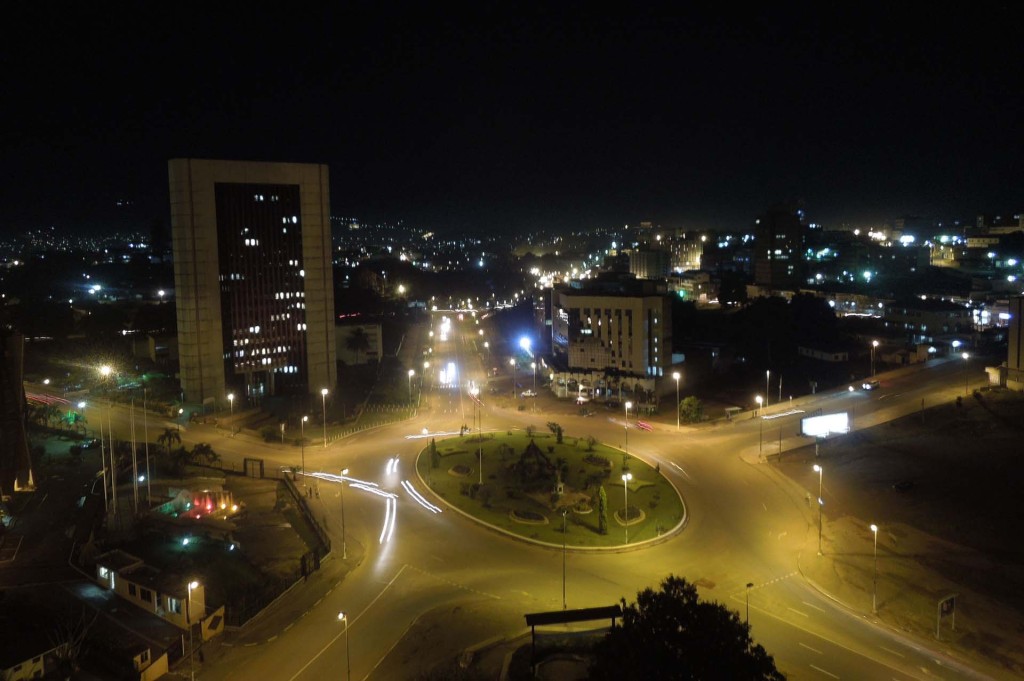
Whenever I travel to Yaounde - for training or meetings or whatever business they call me in on - I feel as though I've stepped into a whole new world. It's nothing like life at post, in my village. It's a real city complete 2 million souls living, breathing, commuting, going about their daily lives. But it's not like America either; the bustling outdoor markets, the inhabitants who shout "la blanche!",  the hills dotted with palm trees, and the motorcycle-taxis just don't jive with my sense of America. But wouldn't it be boring if it felt like home? Here, I never know what's around the river bend. And it's always an adventure!

And Yaounde is a big playground. Located in the Center region, it is often sunny and steamy, though rain does come and go. It has universities, including Yaounde I and II where most of the college students in the country attend. It has museums and churches, restaurants and shopping. It has sprawling views both from its seven hills and from its sky scrapers - like the Hilton. And the Hilton has Hilton Happy Hour - Mojitos, Manhattans, and Margaritas, oh my! 
View from the Hilton at night {via}

Friday, November 29, 2013

Baby Birds Becky & Danielle Venture from the Nest…

..and after plunging 127 feet from the top of a tall tree with yellow flowers and white bark, realize their wings do in fact work and start soaring!

But in all seriousness, that is what traveling in Cameroon is like - at least for a type-A, plan-ahead-every-tourist-site-and-meal traveller like me. If you have ever traveled with me (shout out to Laura Vossler who has dealt with it more than most of my travel buddies), you know exactly what I’m talking about. In the past, when I travelled to Amsterdam or to Athens, I have walking tours planned and museums scheduled; I can tell you which three foods we have to try; I know where we’re staying and how we get there from the airport and how much it will cost. I’m not psycho, I swear; it just makes me feel comfortable and relaxed to have a plan.

In Cameroon, you don’t have a plan. You have a destination, and you figure it out along the way. At every step of the trip, I wonder how we’re going to manage the next one. And yet, miracle of miracles… it always just works out. You can’t anticipate how, or when, or why. It make take twice as long as you anticipated, or cost a little more. Yet somehow, IT JUST HAPPENS!

Let me explain.

ShareThis